Posted on Jan 12, 2026
Image Credit:
Image Credit:
File ID 15160242 | © Arne9001 | Dreamstime.com
Share: 


Bone loss around teeth often begins quietly, and many patients don’t feel pain until the damage is advanced. That’s why a specialized periodontal evaluation is so important—especially if you’ve noticed bleeding gums, persistent bad breath, gum recession, or shifting teeth. Periodontists are trained to detect subtle changes in the tissues and bone supporting your teeth, long before they become severe enough to cause tooth loss. Early diagnosis can mean the difference between stabilizing a problem with conservative care and needing more complex restorative solutions, such as bone graft dental procedures or dental implants in Portsmouth, options later on.
Many patients search online for a dental surgeon near me only after symptoms worsen, but bone loss can be diagnosed at a much earlier stage through routine exams and imaging. Catching it early also helps preserve your natural teeth, minimize treatment costs, and protect the overall health of your mouth.
One of the most reliable ways periodontists detect early bone loss is through periodontal probing. Using a small measuring instrument, they gently check the depth of the space between your tooth and gumline. Healthy gums usually have shallow pockets, while deeper pockets can indicate infection and breakdown of the supporting structures. This process is part of a comprehensive periodontal evaluation, and it is typically recorded over time to identify trends that might signal worsening alveolar bone loss.
When these findings are paired with other diagnostic tools, they can reveal bone loss before it becomes severe enough to threaten tooth stability.
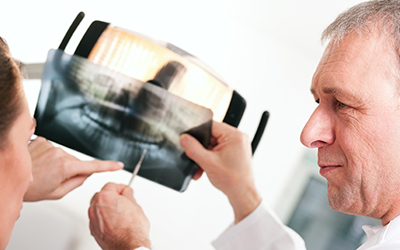
Because bone changes can’t be seen directly during a visual exam, dental X-rays play a central role in diagnosing bone loss. Traditional bitewing and periapical x-rays show the bone level around teeth and can detect patterns consistent with periodontal disease. Over time, a series of X-rays can highlight subtle changes that may not yet be noticeable through symptoms alone.
In some cases, periodontists also use a CBCT (cone beam CT) scan to obtain a 3D view of bone density and structure. This advanced imaging is especially helpful when planning treatment for areas at higher risk of severe bone loss or when evaluating whether a patient may need bone graft dental treatment or implant support. If tooth loss has already occurred, imaging also helps determine if dental implants in Portsmouth can be pursued safely.
Bone loss rarely occurs without a reason. Periodontists don’t only measure what’s happening—they also identify why it’s happening so they can stop progression. During diagnosis, they’ll review your medical history and lifestyle factors that can accelerate bone breakdown. Common contributors include:
This risk-based approach is critical because it helps your periodontist personalize the treatment plan and prevent future damage. Patients who feel uncertain about symptoms often type “dental surgeon near me” into a search bar, but the most effective next step is a periodontal assessment designed specifically to detect and protect bone health.
If a periodontist detects active infection or early bone loss, the first goal is to stop the disease process. Non-surgical treatment, such as scaling and root planing, can remove plaque and bacteria below the gums, reducing inflammation and helping tissues reattach. In more advanced cases, periodontal surgery may be recommended to clean deeper areas and regenerate lost support.
When bone loss has progressed enough to weaken the foundation of a tooth—or when planning for tooth replacement—bone graft dental therapy may become part of the plan. Grafting can rebuild the bone structure, improve stability, and support future restorative solutions. This is often a key step for patients considering dental implants in Portsmouth, since implants require adequate bone volume for long-term success.
A major advantage of early diagnosis is that it keeps your options open. If a tooth becomes unsalvageable, your periodontist can help you plan the healthiest path forward, whether that includes preservation techniques or implant therapy. By identifying bone loss early, your specialist can sometimes prevent the need for extensive grafting—or make grafting more predictable and successful. If you’ve found yourself searching for a dental surgeon near me due to recurring gum issues, scheduling a periodontal consultation sooner rather than later can protect your smile and reduce future treatment complexity.
With modern diagnostics—probing, imaging, and individualized risk assessment—periodontists are uniquely equipped to detect bone loss early and guide patients toward healthier outcomes. Whether your goal is to save your natural teeth, stop gum disease, or explore options like bone graft dental procedures and dental implants in Portsmouth, early detection is the key to preventing severe bone damage and maintaining confident oral health.
File ID 15160242 | © Arne9001 | Dreamstime.com
Share:
We offer a variety of quality periodontal and reconstructive services. As we work with each client and other dental providers we personalize patient treatment plans to satisfy patient needs. We pride ourselves on providing cutting edge treatment including conventional and laser periodontal services, soft and hard tissue grafting and management, and dental implants. - Portsmouth, NH Periodontist
Phone:603-427-8383
Fax: 603-501-0595
email:info@coastalperiosurgery.com
25 New Hampshire Ave. Suite #285
Portsmouth, NH 03801


